As a great lover of the Corsican Nanne, and the Corsican music in general, I was very much pleased to hear, some
years ago, Mrs Paule Tristani singing nanne for her grandchildren. It was in Santa-Maria-Poghju, where I stayed for
a while. As I recognized the nanne, beautifully sung by Mrs. Tristani, I got acquainted with her and we spoke about
the nanne and the Corsican music. Some time ago I got the CD Da l'Alturaghja from Anna Rocchi with Nanna.
Then I heard the music programme on Radio Corse Frequenza Mora with Anna Rocchi and Isulatine, some weeks ago, singing a.o. lullabies
of their CD Sogni d'Aprile. I was so enthousiastic that I made up my mind: I'll write an article about the nanne, the
lullabies, and here it is!
HISTORY
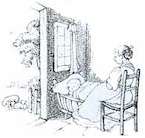
With the nanne, the lullabies, Corsican children get acquainted with singing at a very early age.
Without any doubt the most universal of folktraditions, the lullaby has the same function, very intimate, sung within the family, as
everywhere else. Privilege of the mothers, grandmothers (and godmothers).
The personal character of the trust in the child, hushing sounds, humming stories of today and the past,all known
by oral tradition, became gradually classics.
You find the hushing, affectionate surnames, not in singing their real names, but in sounds like
culumbuccia (little dove), ciocciulecchju (little owl), ciucciarella (little one), that may
suppose an essential sound character, whereas the information tend to the promises for luck and the more
or less realistic wishes for abundance.
There is less known about other stories and phonetics for children: the filastrocca, nursery rhyme,
the fola, myth after real events, or the transfigured real history, the stalbatoghju.
People may be surprised that in some regions babies were hardly rocked to sleep.
In his Musiques Traditionnelles de Corse, Dominique Salini calls attention to the relationship mentioned by Wolfgang Laade
in his studies about laments at funeral ceremonies, between the melody of the lullaby and that of this kind of lament.
On the level of more consciousness there could be seen a parallel: sleep and death are partly related in the
imagination, if not universal, than at least occidental.
You even find hate and violence in certain lullabies:
Sleep Francesca Maria, your father empties the cornloft to dress his beautiful ladies
The strokes with the stick are for us, I have bruised ribs and kidneys
And then the curse:
Ch'elli mi lampinu in grembiu, di Babbitu le stintine:
That they will throw the intestins of your father on my lap
Sometimes it was the only way to express their unhappiness.
Beautiful lullabies from the Corsican patrimony are full of tender emotions, some very old, like the
Nanna di u Cuscioni (see the following history of some lullabies).
Lullabies of the community of shepherds:
Chì aghju da allestì la cena è da cosge li piloni
For I must prepare the supper and sew cloaks
Vi daremu lu maritu allivatu à lu stazzale
You will have a husband, a man raised amongst the shepherds
Ninni Nanna/Trà lu Boiu è lu Sumeri:
Purtaremu lu Ghjesucciu, in li monti di Cuscionu
Cume noi, parlarà corsu, è saremu so piloni
Biglierà latte di capra
Manghjerà brocciu è fiadone
We will bring the little child Jesus to the mountains of Cuscione
And he will, like us, speak Corsican, and we'll be his cloak
He will drink milk from the goat
And he will eat brocciu and fiadone
(goatcurds and cheesecake, Corsican specialities)
Lullabies full of love, lullabies from the Mediterranean area, from all times.
Humming, singing about love, dreams, but also of sorrow due to the wars, loneliness, misunderstanding and oppression.
Rocking the child on the rythm of the viculu, the cradle.
Glorious lullabies, also full of hope, full of love for the little child Jesus, in passionate faith.
An emotional honour to innocence and the future " You are the renewal of mankind. Child, you are the gold of the world".
Finally you can say that the lullaby is part of daily experience, it is a song with an initiating value. Promoting
the sociability of the child, introducing it in the community and then, by singing about allusions to histories in the
past, receiving it in the family.
But what seems the most important, is undoubtedly the undefatigable repeating of that melody, that creates
a "habitus sonore" for the child, thus making him familiar with a special musical system, preparing him to
a combination of sounds, ... a language.
If you might think that lullabies aren’t sung anymore today: Corsican children are so lucky to still hear them.
The group Isulatine was so kind to let me know, that they were brought up with lullabies, even sung by their
father. They still sing them for their children(and other children) and the little grandson has the same joy. He is
rocked to sleep, not only by his parents, but by his grandmother as well!
NAMES OF LULLABIES:
Nanna di u Cuscione
Sott'a lu Ponte
Nanna d'Aïtone
Nanna di Zia Grazi
Nanna di u Cuscinu
Nanna di u Setanta
Ciuccarella
Dormi
Dormi par Pena
A Ricchezza
Nanninna la mia diletta
For the little child Jesus: a.o. from the Lira Sacra
Nanne à Ghjesù
Re di u Mondu
Nanna di u Bambinu
Dormi Dormi Bel Bambin
Ninni Nanna
Adeste Fideles
Venite Adoriamo
Tu Scendi da le Stelle
Chì Vol Vedere di Mezzanotte il Sole
Groups of singers, only lullabies:
Caramusa: CD Nanni è Natali Tradiziunali di l'Isula di Corsica
A Cumpagnia: CD Nanne di Corsica
Other groups, singers, composers:
Maurice Ravel
I Muvrini
Canta u Populu Corsu
Canti Corsi in Tradizione
Diana di l'Alba
A Ricuccata
I Corsi
Isulatine
Anna Rocchi
Mighela Cesari
Jacky Micaelli
Jean-Paul Poletti
A Filetta
Also with their own compositions:
I Muvrini
Les Nouvelles Polyphonies Corses/Soledonna
Petru Guelfucci
Isulatine
All with their so much valued composers and musiciens.
To those I forgot to mention and to appreciate, I do apologize!
HISTORY OF THE FOLLOWING LULLABIES:
Nanna di u Cuscione
Without any doubt the Nanna di u Cuscioni is the most famous of Corsican lullabies.
It has generally seven strophes, in which the grandmother, pursuing her dream of the future, describes the ceremony of
the wedding to the little girl. Poetry, brilliant in it's simplicity, where reality and wishes of consideration are mingled.
On the " I go to prepare supper and sew the cloaks..." follows "we will give you a husband ... a very good catch, whom the
men of the mountains will recognize as their chief..."
Some tens of musical versions of this lullaby exist, all over Corsica, proof of its popularity, and the inventiveness
of Corsican people.
(Mighele Raffaelli and Ghjermana de Zerbi chose fourteen of them for their anthology of Corsican singing).
Certainly one of the most archaic forms of Corsican singing. The composer Iannis Xenakis ascribes a pre-Christian origin to this music.
Recent discoveries on Crete found systems of script of music, which reveal songs that approach very much the melody of this
lullaby.
Sott'a lu Ponte
Borrowing and old melody, called "Corsicana", which is to be found in the tradition of Northern Sardinia, a composer
from Nice, Théo Lacuire, and Corsican poet-writer Petru-Santu Leca, created this lullaby at the Secondary School of
Ajaccio in 1920. It was a satirical protest against the War of 1914-18.
The mother rocks her little daughter; the father will never return from the front.
Dormi per Pena
There isn’t so much known about the history. The rumour goes about a mother, who hid her husband, who was looked for, in
the cradle. But that isn’t sure.
Dormi pè pena - Anna Rocchi
Sott'à lu ponte - Jacky Micaelli
Nanna pè i ciucci d'oghje - I Muvrini
Texts:
Nanna di u Cuscione
Lullaby of Cuscione
Ne li monti di Cuscione
Ci era nata una zitella
E' lu so cara mammona
Li faccia la nannarella
E quand'ella l'annannava
Stu talentu li pricava
Addurmentati parpena
Allecrezza di mammoni
Chì aghju da allestì la cena
E' da cosge li piloni
Pà u to tintu babbarellu
E' pà li to fratillonni
Quandu andarete spusata
Purtarete li frineri
N'andarete incavalcciata
Cù tutti li mugliaccheri
Passarete insannicciata
A' caramusa imbuffata
Quandu arrivarete à lu stazzu
Duve avete po da stà ne
Surtarà la suciarona
E' vi tuccarà la manu
E' vi sarà prisintatu
Un tinellu di caghjatu
Vi daremu lu maritu
Allivatu à lu stazzale
Un billissimu partitu
E' sarà lu capurale
Di li nostri muntagnoli
Picuraghji è capraghjoli
On the hills of Cuscione
A little girl was born
And her dear grandmother
Cradled her tenderly
These are the wishes
She made as she rocked her
Sleep a little
Grandmother's joy
For I must prepare the supper
And sew cloaks
For your poor little father
And for your big brothers
When you get married
You will carry the distaffs
You will ride in majesty
On horseback with the
Men of honour
To the sound of bagpipes playing
When you arrive at the sheepcot
That will become your home
Your mother-in-law will meet you
And take you by the hand
And will present you
With a bucket of clotted milk
You will have as husband
A man raised amongst the shepherds
A very good catch
Who will be the chief
Of our mountain folk
The sheep and goatkeepers
Text and translation: CD Canti Corsi in Tradizione
Sung by: Anna Rocchi (from the CD Caramusa: Nanni è Natali Tradiziunali di l'Isula di Corsica)
Sottu à lu Ponte
Underneath the bridge
Sott'à lu ponte ci luce la luna
E stelle in celu ù ne mancu mancuna
Dormi
In li castagni si lagna lu ventu
U nostro lume sarà prestu spentu
Dormi
Ind'una casa - ma quale sarà! -
Batte lu stacciu è senti cantà
Dormi
U ghjattu maiò s'alliscia u mustacciu
Above the bridge the moon beams
Not a single star is missing
Sleep sleep
The wind moans in the chestnut groves
The lamp is soon to go out
Sleep sleep
In a house - but who can it be - ?
The sieve and a song
Sleep sleep
The faithful old Tom cat sleeks his whiskers
Pianta la voce, si cheta lu stacciu
Dormi
Sò cinque mesi chì no semu sole
A guerra hà pigliatu i babbi à e figliole
The sieve stops, the voice breaks off
Sleep sleep
We have been alone now for five months
The war has wrested their father from little girls
Mi frighje lu core, ùn ne possu più
Lascia piegne à mè, sta notte, ma tù
Dormi
My heart breaks and I am exhausted
Let me weep all my sorrow tonight
But you, child, sleep
Text and translation: Petru Santu Leca - A Cumpagnia: Nanne di Corsica
Sung by: Jacky Micaelli (from her CD Amor'esca)
Dormi per pena
Sleep a little
Dormi per pena in lu to viculellu
Ch'eiu fia coce e buchje à u purcellu
Per ch'ellu sia in natale
U spavechju di u lucale
Sleep a little in your cradle
That I can cook the peelings for the pig
So that he will be at Christmas
The surprise of the village
A lu serviziu diventerai sargente
In permissione ci venerai suvente
Per fà vede i to galloni
Ninni nanna e mio speranze
As a soldier you will be a sergeant
You will often come on leave
To show your galloons
Little baby, child of my hope
Tutte le donne ti cannuchjuleranu
E per maritu tutte ti vularanu
Sceglierai a più garbata
Ninni nanna inzucherata
All the women will look at you
And all of them will want to marry you
Choose the nicest one
My sweet little baby
Ghjanettu Natini
Arr.: Antoinette d'Angeli
Translation in French: Antoinette d'Angeli
Translation in English: Yvonne Peters
Sung by Isulatine from their CD Sogni d'Aprile
Postscript
I do hope you will find joy and happiness in listening to the Corsican nanne. That you will even sing them for your
own babies and grandchildren or other beloved children.
And for Christmas time: the songs for the Child Jesus are sung everywhere and make people happy!
Yvonne Peters
December 2005
Sources:
Texts:
Philippe-Jean Catinchi: Polyphonies Corses, 1999
Ghjermana de Zerbi:
- Canta u Populu Corsu, book, article: Splendeur et
Misère du Chant Corse
- Préface CD A Cumpagnia: Nanne di Corsica
Caramusa, Francescu Berlinghi: CD Nanni è Natali Tradiziunali di l'Isula di Corsica
Texts history lullabies:
Mighela Cesari/Mighele Rafaelli: CD In Cantu Profundu
Jean-Paul Poletti et le Choeur d'Hommes de Sartène: CD Cantu di a Terra
Texts lullabies:
Nanna di u Cuscione: CD Canti Corsi in Tradizione
Sott'a lu Ponte: CD A Cumpagnia: Nanne di Corsica
Dormi per Pena: CD Isulatine: Sogni d'Aprile
Singing:
Anna Rocchi
Jacky Micaelli
Isulatine
Consulted CD's:
Caramusa - A Cumpagnia - Maurice Ravel - Canta u Populu Corsu - I Muvrini - A Filetta - Canti Corsi in Tradizione - Angjula Déa -
Les Nouvelles Polyphonies Corses/Soledonna - Diana di l'Alba - A Ricuccata - I Corsi - Isulatine
- Anna Rocchi - Mighela Cesari - Jacky Micaelli - Jean-Paul Poletti - Petru Guelfucci
Paintings, photos:
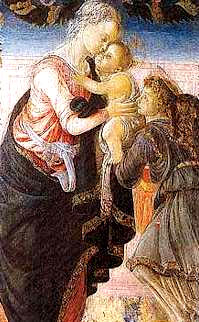
Sandro Botticelli (1445-1510): Mary and Child, supported by an angel, underneath
a garland; Musée Fesch, photo Philippe Jambert, Kalliste®, hiver 2004
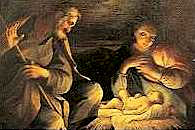
Emilie XVIIth century, Nativité; Musée Fesch, booklet Caramusa, photo Christian
Andréani
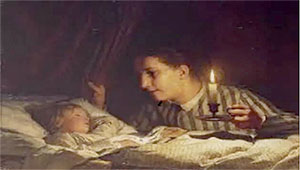
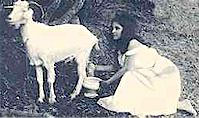
Aglaé Meuron (Calenzana 1836- Ajaccio 1925): La petite soeur; photo Philippe Jambert, Kalliste®
hiver 2005