![]() |
![]() |
![]() |
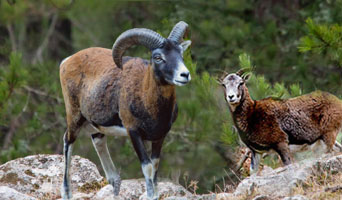
| Mouflon de Corse (Muvra) The mouflon is the symbol of the wild fauna in Corsica. There are about 400-500 living in Corsica now and they are protected. The male has 80 cm long curved horns, while those of the female are very small, practically non-existant. Habitat: mountains |
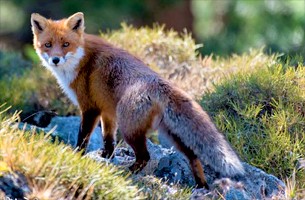
Renard (Volpe) The fox is an opportunistic predator, who eats almost everything: birds, chickens, insects, fruit. Habitat: all sorts and conditions |
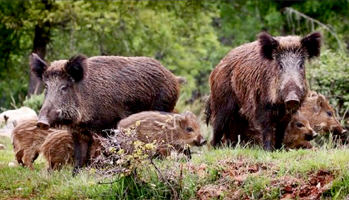
Sanglier (Cignale) The wild sanglier lives in troups directed by a dominant female. The old male prefers solitude. They are essentiel vegetarian,
eat roots, champignons. Habitat: forest, maquis |
![]() |
![]() |
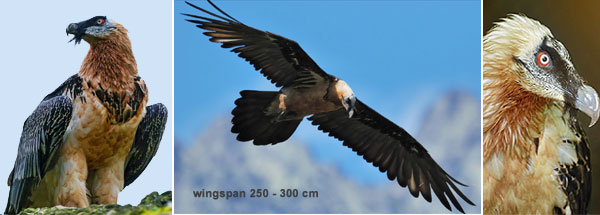
| Gypaète barbue (Altore) The most rare species in Europe, only 9 couples are known in Corsica. He is a hunter, but sometimes he eats also carrion. Habutat: mountains |
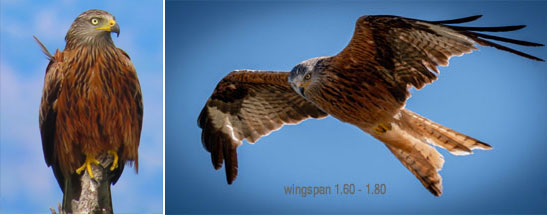
Milan Royal (Filanciu) Easlily recognised by its forked tail. He eats mainly prey: birds, rodents. Very abundant in the Balagne. Habitat: valleys, prairies; partial migrator |
![]() |
![]() |
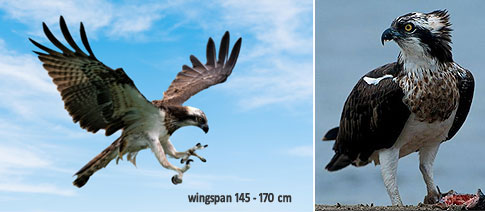
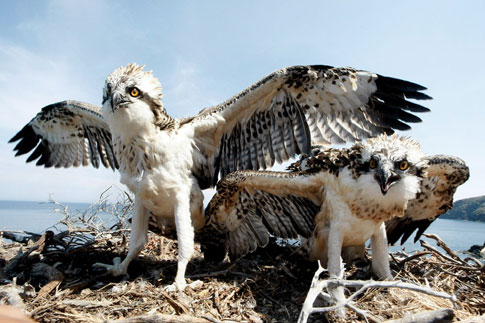
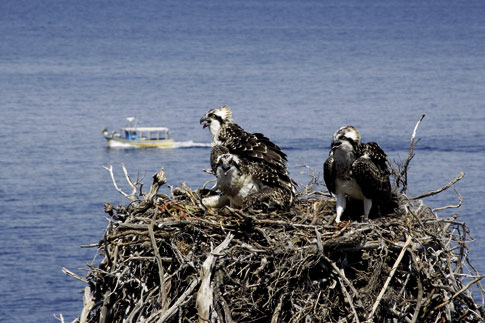
| Balbuzard pêcheur (Alpana) The balbuzard is, as his name indicates, exclusively a fisher. He makes his nest (2 mt high and 1.50 in diameter)
high up the rocks. Actively protected, their numbers have increased from 6 couples in 1977 to 20 couples. Habitat: Costal rocks, rivers; migrator, present march-november |
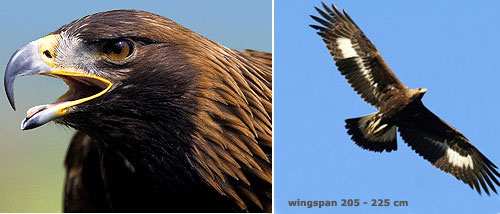
Aigle Royal (Acula) About 30 couples propagate themselves in Corsica. Fortunately, their number is slightly increasing. Great predator, he hunts by skimming
over mountain-ridges to surprise his prey. Habitat: mountains |
![]() |
![]() |
![]() |
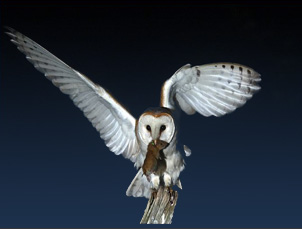
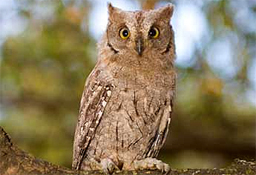
| Hibou petit-duc (Ciocciu) Not much bigger then your fist, its repetitive whistle gives the Corsican night its magic character. It eats mainly insects;
crickets, butterflies. Habitat: maquis, migrator or sedentary |
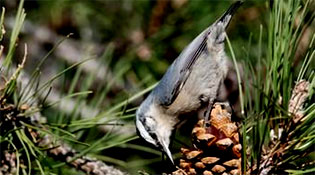
Sittelle corse (Pichjarina) The sittelle corse is the only really endemic bird in Corsica. It attaches itself to a specific Corsican tree, the pine-tree. Habitat: pine-trees between 1000 - 1500 m. |
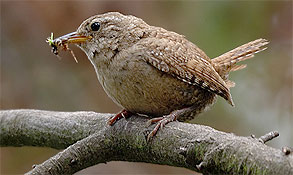
Troglodyte mignon (Scrizzula) This tiny bird weighs only 9 grams. Habitat: forest, maquis |
![]() |
![]() |
![]() |
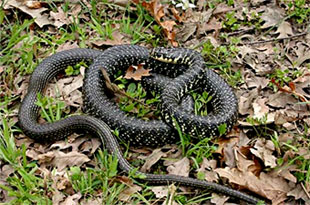
| Couleuvre verte et jaune (Sarpu) There are no poisonous snakes in Corsica, but a bite from this one is painful. She is also very protected.
She hibernates in a hole in the ground. To observe her the months april-may are the best; then she is sexually active. Habitat: maquis, dry and sunny places |
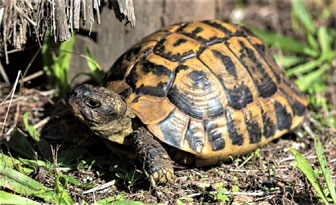
Tortue d'Hermann (Cuppulata) Unique land turtle, protected. Now, a good polulation live in the south, Porto Vechio, Figari and the Sartenais.
More information about this unique animal at the
"Village des Tortues" in Moltifao. Habitat: maquis, areas with cork-oaks and grazing sheep |
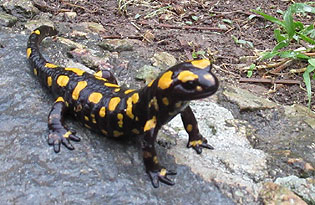
Salamandre de Corse (Catellu muntaninu) Massive body, black and yellow. Salamanders need a certain degree of humidity: they appear only at night or just after
a rainshower. Habitat: forest, woodland |
| top | home |